The Nayal Group is dedicated to pioneering interdisciplinary research in Organic Synthesis & Catalysis, Biobased Polymer & Material Synthesis, Free Radical Chemistry, and Computational Chemistry. Our team of experts is committed to pushing the boundaries of knowledge and innovation, striving to make groundbreaking discoveries that impact various industries and contribute to scientific advancements.
We are currently exploring four main research areas:
Catalysis & Synthesis
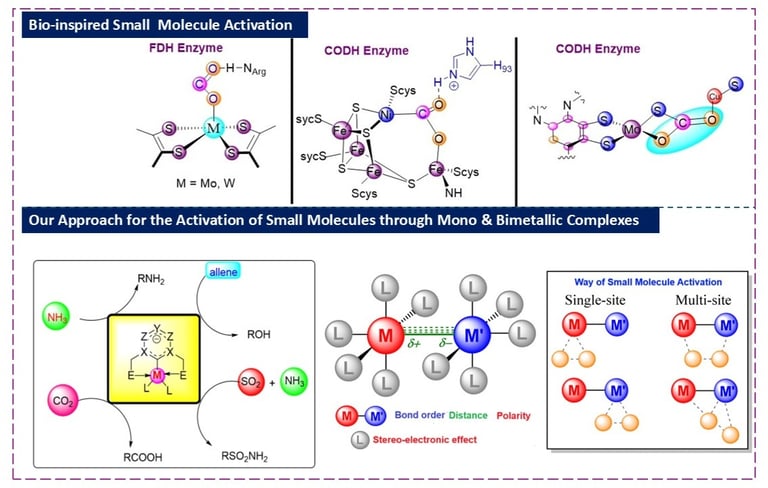
The rapid depletion of fossil fuels and the urgent need for sustainable energy solutions have sparked significant interest in activating small molecules. Molecules such as carbon dioxide (CO2), carbon monoxide (CO), oxygen (O2), nitrogen (N2), hydrogen (H2), and methane (CH4) hold great potential as versatile resources for generating, converting, and storing clean energy. Activating these molecules through catalysis could provide an environmentally friendly and sustainable approach to unlocking a new era of energy innovation.
CO2 & Biobased polymer & materials
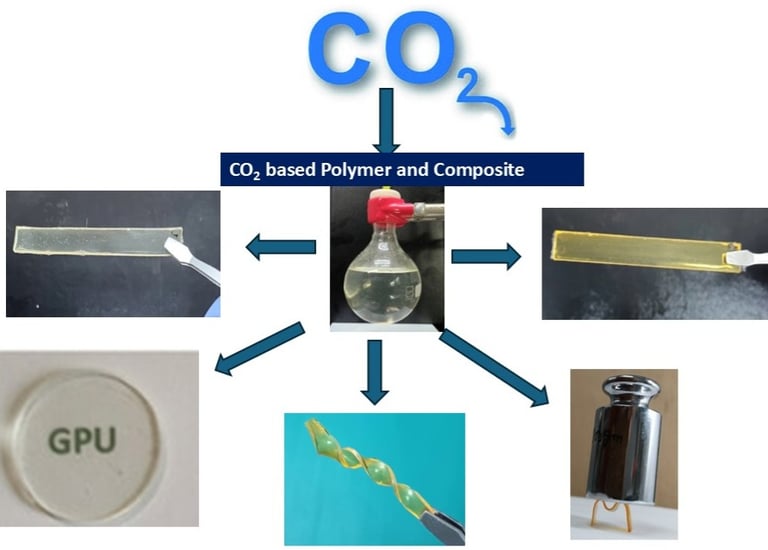
CO2-based polymers, such as polycarbonates and polyurethanes, exhibit versatile properties suitable for applications in packaging, coatings, and adhesives. Their production often involves catalyzed copolymerization of CO2 with epoxides, offering a greener route to polymer synthesis. The development of CO2-based polymers aligns with circular economy principles, promoting environmental sustainability and innovation in materials science.
Free Radical Chemistry
Autoxidation refers to the free radical chain reaction responsible for degrading all hydrocarbons, including plastics, rubbers, lubricants, (bio)fuels, and the lipids found in living cell membranes. The primary radicals involved in these chain reactions are peroxyl radicals, targeted by radical-trapping antioxidants (RTAs) added to hydrocarbon-based products as preservatives. Our research examines the functioning of various RTA classes commonly used in hydrocarbon products, such as phenols, amines, and sulfur-containing molecules.
Our Research group aims to design and synthesize novel radical-trapping agents and explore them in the autoxidation inhibition of hydrocarbons.
Computaional & Mechine Learning
→

Density Functional Theory (DFT) calculations have become a standard method for investigating the mechanisms of organic reactions. They provide valuable insights into transition structures while effectively managing computational costs. We apply DFT calculations to explore the factors that influence selectivity in asymmetric reactions and various organic transformations. This enhances our understanding of their mechanisms and helps in developing models of selectivity. Our research also focuses on photocatalysis, a widely used technique in industrial asymmetric synthesis. However, the specific roles of catalysts in achieving enantioselectivity remain poorly understood. These computational analyses will enable us to design superior catalysts for essential industrial processes.


Gallery
Showcasing our innovative research in chemistry and materials science.


